How Food Businesses Should Plan for the Upcoming Transition
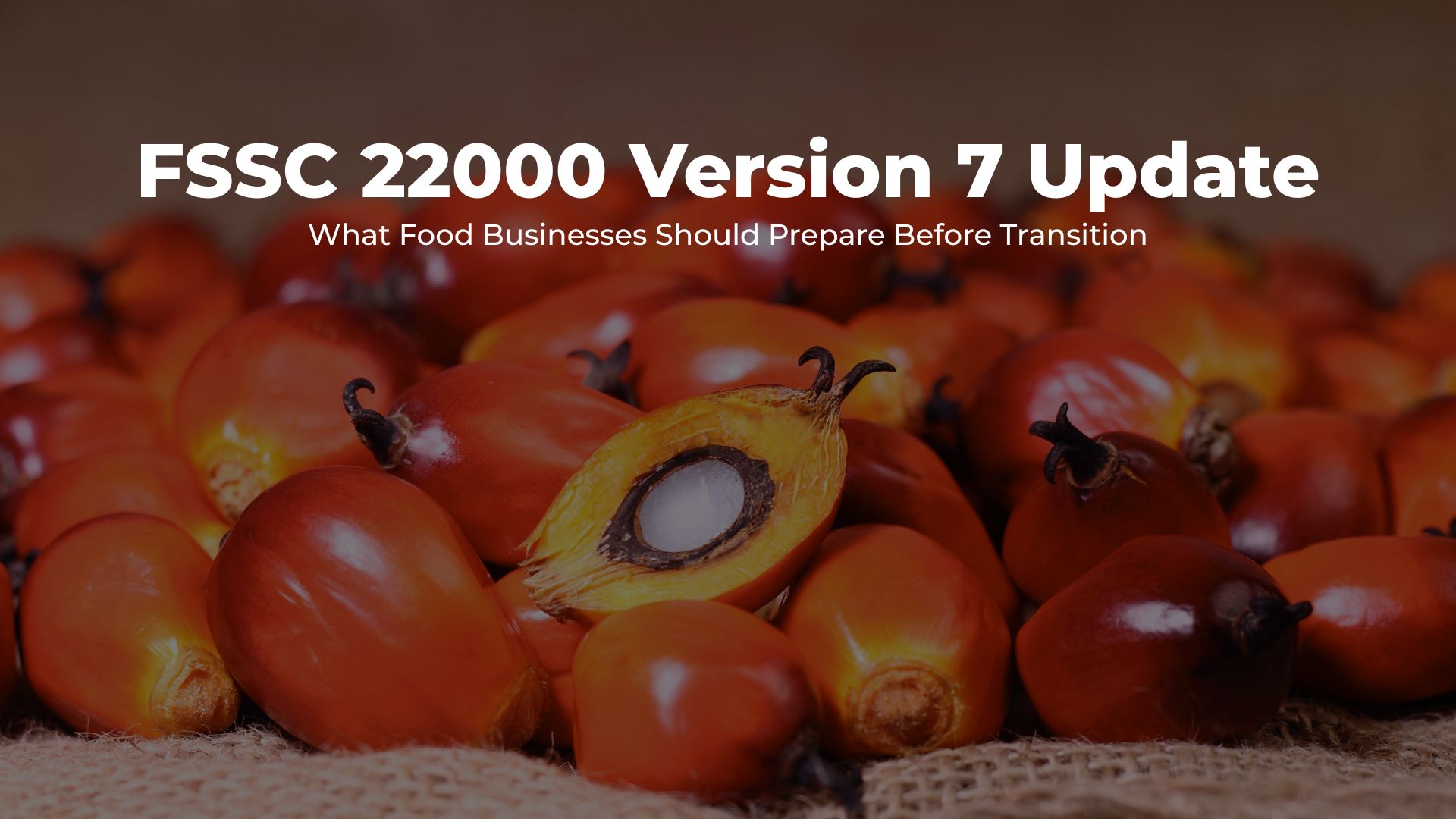
The Foundation FSSC has confirmed that FSSC 22000 Version 7 is expected in early May 2026, followed by a 12-month transition period for certified organisations and certification bodies.
The revision aims to update the certification scheme, align with GFSI Benchmarking Requirements v2024, and improve clarity and consistency across the food safety certification framework.
It is also intended to incorporate the updated ISO 22002 PRP series, strengthen support for organisations’ contributions to the Sustainable Development Goals (SDGs), and provide a more defined structure for food chain categories.
For food businesses currently certified to FSSC 22000 Version 6, this signals the need to begin reviewing their food safety management system and preparing for potential transition activities.
FSSC 22000 Version 7 Overview
| Item | Details |
|---|---|
| Expected publication | Expected in early May 2026 |
| Expected transition period | 12 months |
| Current version | FSSC 22000 Version 6 (remains valid during transition) |
Drivers Behind the FSSC 22000 Version 7 Revision
Foundation FSSC has identified several factors behind the development of Version 7:
• incorporation of the updated ISO 22002 PRP series
• alignment with GFSI Benchmarking Requirements v2024
• stronger requirements to support organisations’ contributions to the Sustainable Development Goals (SDGs)
• a more defined structure for the division of food chain categories
• editorial improvements and scheme clarification
These developments aim to strengthen alignment with global food safety expectations and support continuous improvement across certified organisations.
What This May Mean for Food Businesses
For organisations already certified to FSSC 22000 Version 6, the revision is generally expected to involve system review and targeted updates rather than a complete redesign of the food safety management system.
Organisations often begin reviewing areas such as:
• PRP alignment with updated ISO 22002 standards
• scheme expectations influenced by GFSI benchmarking
• food chain category scope and classification
• documentation readiness for transition audits
Starting preparation early can help organisations integrate updates smoothly once Version 7 is officially released.
Preparing for FSSC 22000 Version 7
Until Version 7 is officially published, FSSC 22000 Version 6 remains the applicable certification scheme, and organisations should continue maintaining their current food safety management systems.
While the final Version 7 requirements will only be confirmed upon publication, many food businesses are beginning to review how the upcoming revision could influence their food safety management systems, PRP alignment, and certification planning.
Early awareness allows organisations to prepare for the transition more smoothly once the new version is released.
(A) Organisations Currently Certified to FSSC 22000 Version 6
For organisations already certified to FSSC 22000 Version 6, the transition to Version 7 is expected to involve system review and alignment rather than a complete redesign.
Until Version 7 is published, Version 6 remains the applicable certification scheme. Preparation typically includes reviewing areas such as:
• PRP implementation and operational control
• supplier approval and monitoring processes
• food safety verification and documentation
• certification transition planning
Starting preparation early helps organisations integrate updates gradually before the transition deadline.
(B) Organisations Not Yet Certified
Organisations planning to implement FSSC 22000 certification do not need to delay implementation.
Establishing a structured food safety management system now helps organisations strengthen:
• food safety risk management
• operational control of PRPs
• supplier oversight
• readiness for certification audits
A well-established system foundation makes future alignment with Version 7 significantly easier.
Practical Questions Food Businesses Are Asking
1. What should organisations review before Version 7 is published?
Many organisations begin by reviewing their PRPs and identifying processes that may be affected once the updated scheme requirements are released.
2. How much time will organisations have to transition?
Foundation FSSC has confirmed that organisations will be given a 12-month transition period from publication to allow effective implementation of the new version.
3. Why is FSSC 22000 being revised?
The revision aims to align the scheme with updated GFSI benchmarking requirements, strengthen clarity across the certification framework, incorporate the ISO 22002-x:2025 PRP series, support organisations’ contributions to the SDGs, and provide a more defined structure for food chain categories.
How Nexus Consultancy Supports FSSC 22000 Preparation
Nexus Consultancy supports organisations preparing for FSSC 22000 implementation and Version 7 transition through:
• FSSC 22000 Consultancy
• FSSC 22000 Training Programme
• FSSC 22000 Transition Preparation Support
For organisations exploring their preparation options, our team can discuss suitable approaches based on your current food safety management system and certification plans.
Speak with our team to discuss your FSSC 22000 Version 7 preparation.