Preparing for the Upcoming ISO 9001 Revision
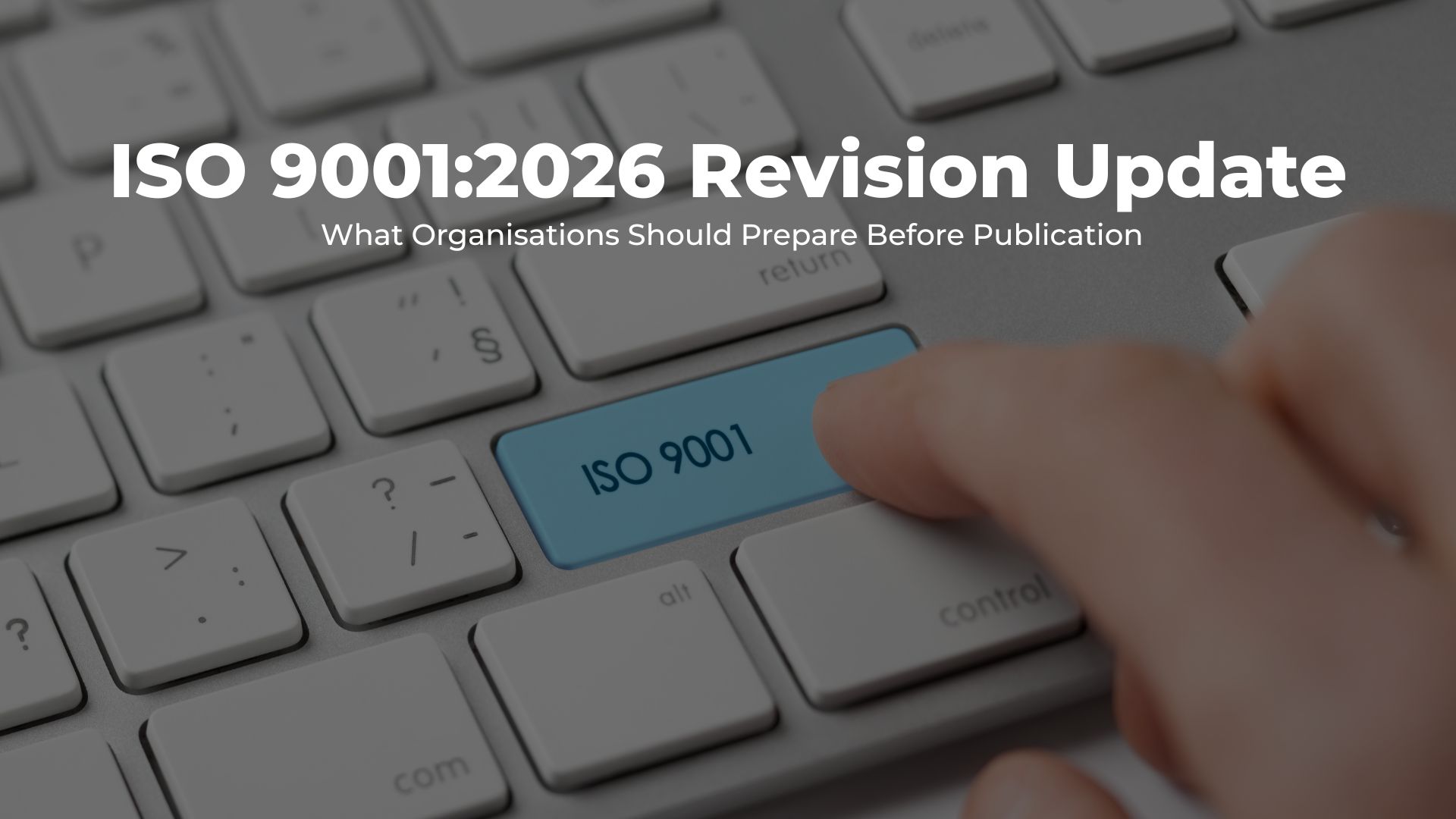
ISO 9001, the international standard for Quality Management Systems (QMS), is currently undergoing revision, with the updated edition ISO 9001:2026 expected to be published in the second half of 2026, replacing ISO 9001:2015.
As organisations increasingly rely on structured management systems to support operational performance, supply chain coordination, and data-driven decision-making, the revision aims to ensure ISO 9001 continues to reflect the realities of modern business environments.
For organisations currently certified to ISO 9001:2015, the upcoming revision signals the importance of reviewing the existing Quality Management System and preparing for a future transition once the revised standard is published.
Understanding the direction of the revision early allows organisations to plan system updates gradually rather than facing compressed timelines closer to the transition deadline.
ISO 9001:2026 Key Information
| Item | Details |
|---|---|
| Expected publication | Estimated in September 2026 |
| Expected transition period | Approximately 3 years |
| Current version | ISO 9001:2015 |
Emerging Themes in the ISO 9001 Revision
While the final requirements have not yet been confirmed, discussions within the ISO revision process and draft publications indicate several areas of focus.
1. Climate and environmental considerations
Following the climate-related amendment introduced across ISO management system standards in 2024, organisations may need to consider climate change when evaluating organisational context and interested party expectations.
2. Leadership, ethical behaviour and quality culture
Revision discussions highlight stronger emphasis on leadership responsibility in shaping organisational culture, including ethical behaviour and commitment to quality objectives.
3. Opportunity-based thinking and resilience planning
Draft discussions indicate clearer distinction between risks and opportunities within planning activities, encouraging organisations to balance risk control with proactive improvement and resilience planning.
4. Data-driven performance evaluation
Quality management increasingly emphasises effective use of operational data, monitoring results, and performance trends to support decision-making and continual improvement.
What This Means for Organisations
For organisations already certified to ISO 9001:2015, the revision is not expected to require a complete redesign of the Quality Management System.
Instead, many organisations may review and strengthen areas such as:
• leadership engagement in quality objectives
• organisational context and stakeholder expectations
• risk-based thinking and supplier oversight
• digitalisation of quality management processes
• monitoring, internal audit, and management review effectiveness
Starting preparation early allows organisations to integrate updates gradually once the revised standard is published.
Preparing for the ISO 9001:2026 Transition
(A) Organisations Not Yet Certified
Organisations planning ISO 9001 certification do not need to delay implementation.
Implementing ISO 9001:2015 now helps organisations establish a structured management system and improve:
• process consistency
• operational control
• customer satisfaction
• decision-making based on performance data
The core principles of the standard are expected to remain consistent, providing a strong foundation for the future transition.
(B) Organisations Already Certified
For organisations already certified to ISO 9001:2015, the revision will likely involve system review and integration rather than a full system rebuild.
Common review areas include:
• strategic alignment with organisational context
• supplier and external provider controls
• digitalisation of quality monitoring
• leadership engagement in performance management
Transition planning can begin once the final ISO 9001:2026 requirements are officially published.
Preparing Early Reduces Transition Pressure
Organisations that start reviewing their systems early typically experience smoother transitions compared with those waiting until the final stages of the transition period.
Early preparation helps organisations:
• identify potential system gaps
• integrate improvements gradually
• avoid compressed transition timelines
• strengthen operational performance alongside certification compliance
Practical Questions Organisations Are Asking
1. How might ISO 9001:2026 affect our current Quality Management System?
For most organisations already certified to ISO 9001:2015, the revision is expected to involve system review and refinement rather than a complete redesign. Many organisations may focus on areas such as leadership engagement, organisational context, supplier oversight, and the use of data for quality performance monitoring.
2. When should organisations begin preparing for ISO 9001:2026?
Because the revision process is already underway, many organisations begin reviewing their Quality Management System early to avoid compressed transition timelines once the updated standard is published.
3. Do organisations need to wait for ISO 9001:2026 before implementing ISO 9001?
No. Organisations planning certification can proceed with ISO 9001:2015 implementation. Establishing a Quality Management System now helps improve operational control and provides a strong foundation for transitioning to the updated standard later.
4. What is the first step in preparing for the ISO 9001:2026 transition?
Many organisations begin with a readiness discussion or internal review to understand how their current Quality Management System aligns with the emerging themes of the upcoming revision.
Speak with an ISO Consultant
Nexus Consultancy supports organisations through:
• ISO transition readiness discussions
• ISO 9001 gap assessments
• implementation advisory services
• internal auditor and management training
Arrange a discussion with our team to explore your ISO 9001 transition preparation.