
Danielle Tan
Chief Operating Officer
Learn the hidden packaging risks behind many food recalls, and the practical controls that keep products safe, compliant, and protected.
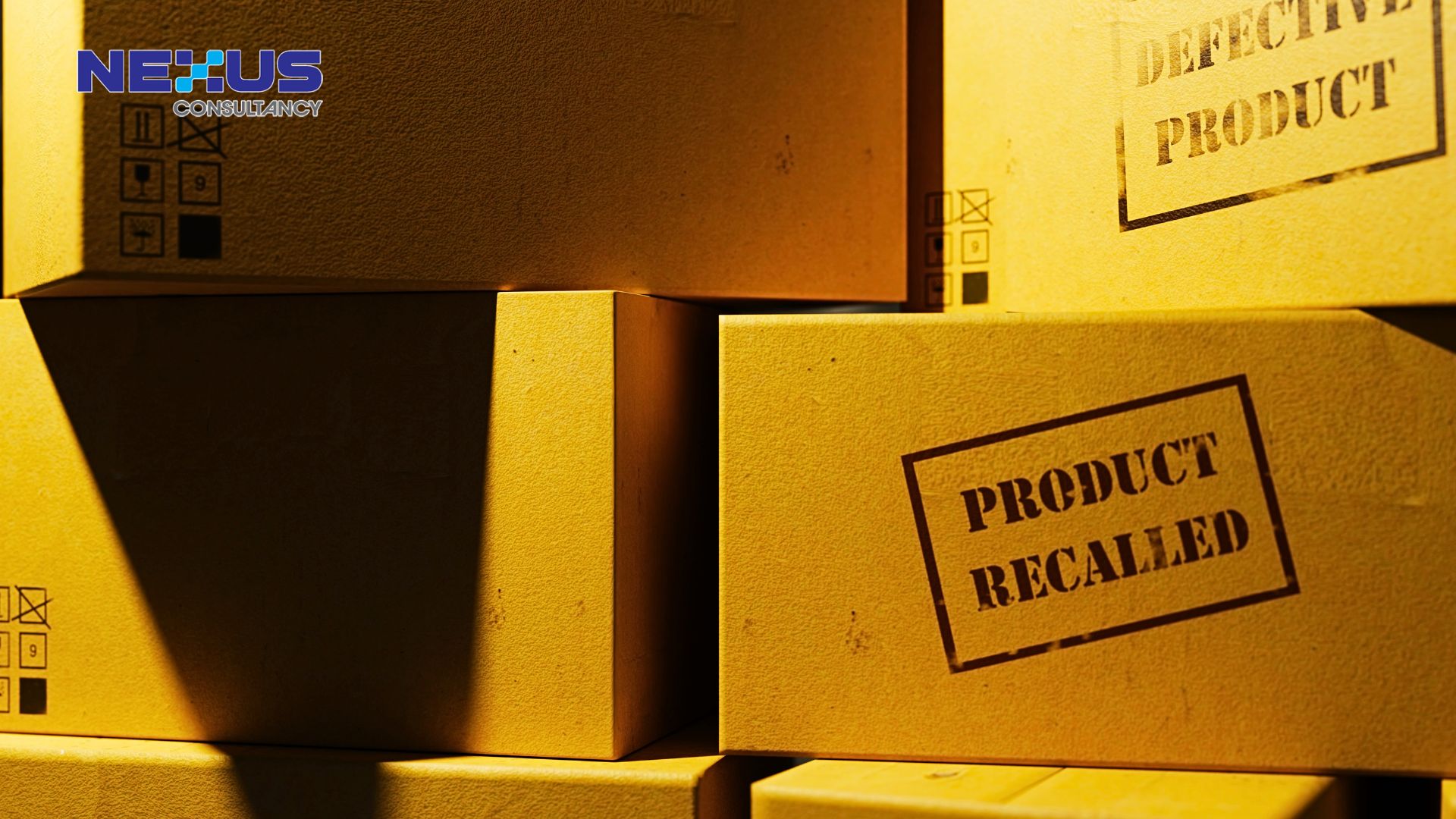
Quick summary: Packaging is one of the most overlooked causes of food recalls, and the failures behind them often stay hidden until products reach consumers. The good news is that most are preventable. This guide sets out each hidden risk and the practical control that keeps it from reaching your customers.
Hidden packaging risks that can trigger a food recall include incorrect or incomplete labelling, packaging material that is not suitable for food contact, poor seal integrity, packaging that fails during transport, weak traceability, and uncontrolled packaging changes. Each of these can lead to contaminated products, undeclared allergens, shortened shelf life, regulatory non-compliance, and costly withdrawals. Controlling these risks before products leave the factory protects consumers and brand reputation, and supports compliance with food safety standards such as FSSC 22000, BRCGS (Brand Reputation Compliance Global Standards), and Hazard Analysis and Critical Control Points (HACCP).
When people think about food recalls, they often picture contaminated ingredients or a fault on the line. Many recalls, though, begin with packaging issues that were missed during product development or introduced through weak change control. A single artwork error or a quiet material substitution can carry consequences as serious as a processing failure. The encouraging part is that most packaging-related recalls are preventable, and understanding the hidden risks is the first step toward a stronger verification and approval process.
Why Packaging Risk Deserves Attention
Packaging protects products from contamination, preserves shelf life, prevents physical damage, carries legally required information, and keeps quality stable through distribution. When any of these fail, the results reach the consumer directly. The table below maps each hidden risk to what can go wrong and the control that keeps it in check.
| Hidden risk | What can go wrong | Control that prevents it |
|---|---|---|
| Incorrect or incomplete labelling | Undeclared allergens, misleading information, mismatched labels | Independent artwork verification and final label approval before production |
| Unsuitable food-contact material | Chemical migration, loss of barrier performance, quality decline | Food-contact compliance documents and a suitability check for the product |
| Poor seal integrity | Spoilage and shortened shelf life from oxygen, moisture, or microbes | Routine seal testing during development and production |
| Packaging that fails in transit | Contamination, leakage, reduced consumer confidence | Transport and distribution simulation testing |
| Weak traceability | Slow recalls and larger-than-needed withdrawals | Clear coding, durable printing, consistent placement of codes |
| Uncontrolled packaging changes | Sealing, machine, or safety failures after a quiet change | Documented change control with technical evaluation, validation, and approval |
The sections below explain each risk and how to control it day to day.
1. Incorrect or Incomplete Labelling
Labelling errors are among the most common reasons for food recalls worldwide. Missing allergen declarations, incorrect ingredient lists, wrong nutritional information or mismatched product labels can place consumers at serious risk.
For example, a product containing milk or peanuts that fails to declare these allergens could trigger severe allergic reactions in sensitive consumers. The food inside may be made correctly, and the packaging alone can still make the product unsafe.
Manufacturers should implement independent artwork verification and final label approval before production begins.
2. Packaging Material That Is Not Suitable for Food Contact
Not every packaging material is appropriate for every food product. Factors such as acidity, fat content, storage temperature and intended shelf life all influence whether a material is suitable.
Using the wrong packaging material may result in chemical migration, loss of barrier performance or deterioration of product quality over time. Manufacturers should always obtain appropriate food-contact compliance documentation from approved suppliers and verify that the material is suitable for its intended application.
3. Poor Seal Integrity
A package that appears sealed may still contain microscopic leaks. Weak or inconsistent seals allow oxygen, moisture and microorganisms to enter the package, reducing shelf life and increasing the risk of spoilage.
Seal integrity should be verified through routine testing during product development and production, rather than relying solely on visual inspection.
4. Packaging That Fails During Transportation
Packaging is subjected to vibration, compression, stacking and temperature fluctuations throughout the supply chain. A package that performs well inside the factory may fail during transport or retail handling.
Damaged packaging can expose products to contamination, cause leakage or reduce consumer confidence. Transport simulation and distribution testing help verify that packaging continues protecting the product under real-world conditions.
5. Weak Traceability
During a recall, speed matters. If batch numbers, production codes or expiry dates are difficult to read, incorrectly printed or missing altogether, identifying affected products becomes far more challenging.
Effective packaging should support rapid product identification through clear coding, durable printing and consistent placement of traceability information. Strong traceability reduces both recall costs and the amount of product that must be withdrawn from the market.
6. Uncontrolled Packaging Changes
Sometimes a supplier changes the composition, adhesive, printing process or dimensions of a packaging material without the manufacturer fully assessing the impact. Even seemingly minor changes can affect sealing performance, machine settings or food safety. This is exactly the kind of change that stronger controls are designed to catch, and it is one of the areas reinforced in How FSSC 22000 Version 7 Changes the Way You Manage Packaging.
Every packaging modification should follow a documented change control process that includes technical evaluation, validation and formal approval before implementation.
Packaging Risk Reaches Beyond the Packaging Department
Managing packaging risk is a shared responsibility across the business. Successful packaging control requires collaboration between purchasing, research and development, quality assurance, production, regulatory affairs and suppliers.
Before approving new packaging, organisations should evaluate food safety, product protection, machine compatibility, regulatory compliance and long-term performance alongside cost and appearance. Cross-functional reviews help identify risks that individual departments may overlook.
Not sure where your packaging controls stand? A short review surfaces the gaps that lead to recalls before products leave your factory. Book a 1-on-1 consultation with Nexus Consultancy.
A Proactive Approach Prevents Costly Recalls
Food recalls are expensive, through direct financial losses and through damaged customer trust, disrupted operations and regulatory scrutiny. Many packaging risks remain hidden until products reach consumers, making prevention far more effective than correction.
A structured packaging risk assessment should become part of every packaging approval process. By reviewing packaging materials, validating performance under actual operating conditions and maintaining effective supplier and change management controls, manufacturers can significantly reduce the likelihood of packaging-related incidents.
Practical Actions for Food Manufacturers
To strengthen packaging control and lower recall risk, consider working through the following:
• Run a packaging-specific risk assessment for every food-contact material.
• Verify that food-contact compliance documents are valid and cover the intended use.
• Approve artwork through independent verification before production.
• Test seal integrity routinely, rather than relying on visual checks.
• Simulate transport and distribution conditions for new packaging.
• Confirm that batch codes, dates, and traceability marks are clear and durable.
• Put every packaging change through documented change control.
• Review packaging risks whenever materials, suppliers, artwork, formulation, processes, or regulations change.
Together these show that packaging risks are identified, controlled, and regularly reviewed.
Common Questions About Packaging Risk and Food Recalls
1. What packaging issues can cause a food recall?
A: The most common are incorrect allergen labels, wrong product labels, poor seal integrity, unsuitable food-contact materials, damaged packaging, missing traceability information, and uncontrolled packaging changes. Any one of these can make an otherwise safe product unsafe or non-compliant.
2. Why are packaging labels so important in food safety?
A: Because labels carry the information consumers rely on to use a product safely, including ingredients, allergens, nutritional values, storage instructions, and expiry dates. Incorrect or incomplete labels can mislead consumers and create significant food safety risks, which is why allergen declarations in particular need independent verification.
3. How can food manufacturers reduce packaging-related recall risks?
A: Through layered controls that each catch a different type of failure: supplier approval, packaging validation, artwork verification, seal integrity testing, transport testing, traceability controls, and formal change management. The layers work together to catch issues before products leave the factory.
4. What is packaging validation?
A: It is the process of confirming that a packaging material consistently protects food safety, product quality, and shelf life under actual manufacturing, storage, and distribution conditions before commercial use. It gives documented evidence that the packaging performs under real operating conditions.
5. Why is traceability important for packaging?
A: Because it lets manufacturers identify affected batches quickly during a recall, which shortens response time, limits business disruption, and reduces the volume of product withdrawn from the market. Clear, durable, consistently placed codes are what make that speed possible.
6. Which food safety standards require packaging risk management?
A: Several do. FSSC 22000, BRCGS Food Safety, ISO 22000, and HACCP-based food safety management systems all expect organisations to identify, assess, and control packaging risks that could affect food safety, legality, and product quality.
7. How often should packaging risks be reviewed?
A: There is no fixed interval. Review packaging risks whenever a new material is introduced, a supplier changes, artwork is updated, a formulation changes, a process is modified, or a new regulatory requirement appears, and run periodic reviews between those triggers to confirm packaging keeps performing as intended.
Final Thoughts
Packaging works as a critical food safety control that protects products through their entire journey, from production to consumption. Treating it that way, with structured risk assessment, validated performance, and firm supplier and change controls, is how manufacturers keep products safe, protect consumers, and defend their brand against a costly recall.
How Nexus Consultancy Can Help
Nexus Consultancy helps food manufacturers turn packaging into a managed, audit-ready part of their food safety system:
• FSSC 22000, ISO 22000, BRCGS & HACCP Consultancy: build and maintain packaging risk assessments, supplier controls, and verification within a certified food safety management system.
• Food Safety Training: strengthen your team’s skills in packaging controls, food-contact compliance, and internal auditing.
• Business Digitalization: move supplier documents, specifications, and verification records off spreadsheets into one centralised, reminder-driven system.
Book a consultation to review your packaging controls and spot compliance gaps before your next audit.
? Book Your Professional 1-on-1 Consultation: https://nexustac.com/contact/
? WhatsApp (Fast Response): https://wa.link/34icb2