
Danielle Tan
Chief Operating Officer
Discover MS 1480:2025 HACCP updates, common audit risks, and practical transition steps. Learn how food businesses can stay compliant and audit-ready in Malaysia.

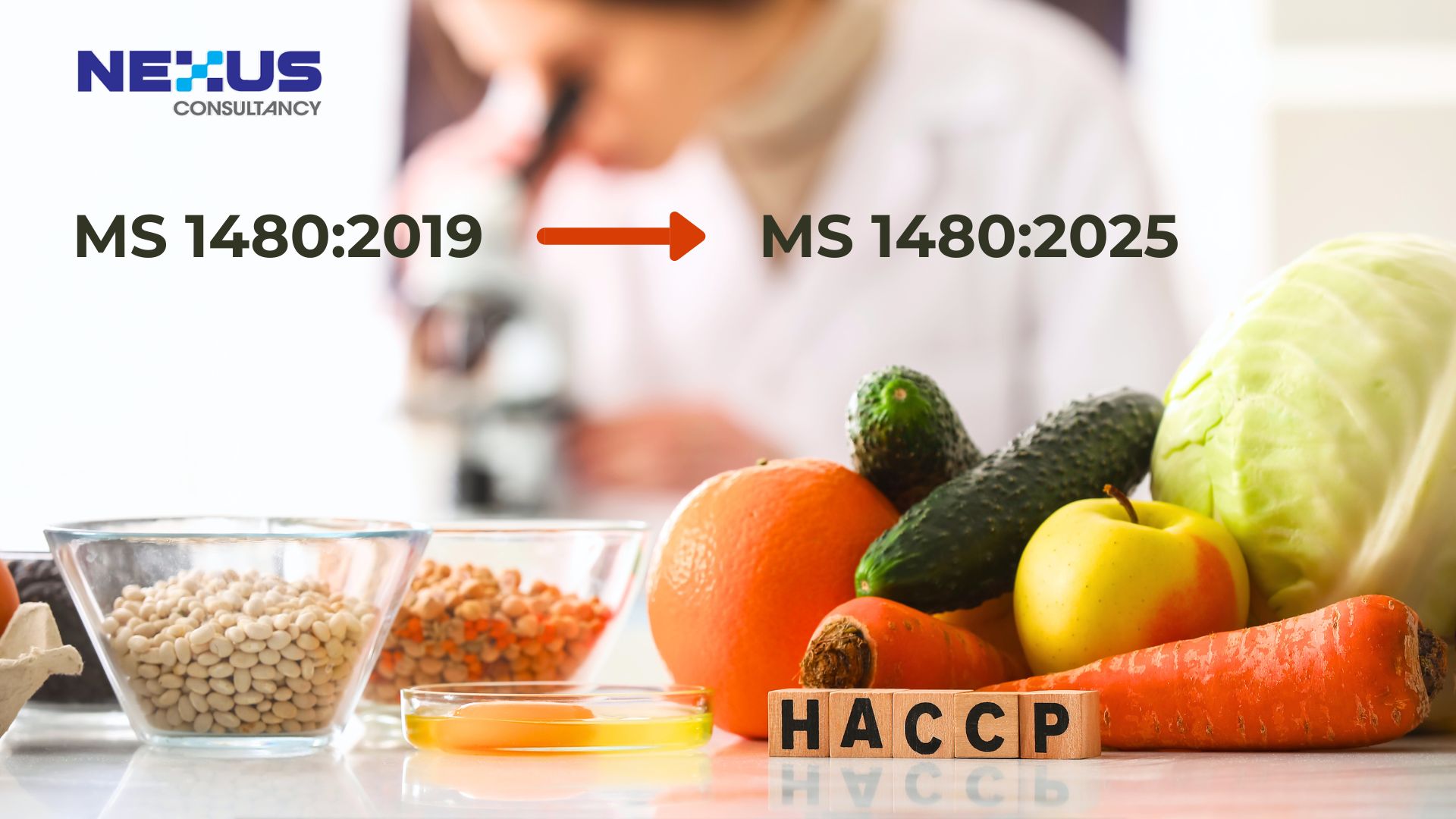
The release of MS 1480:2025 Food Safety according to Hazard Analysis and Critical Control Point (HACCP) System marks a significant update to Malaysia’s HACCP standard. This new revision replaces MS 1480:2019 and introduces clearer structure, stronger risk-based thinking, and closer alignment with Codex HACCP and modern food safety expectations.
For food manufacturers, food service operators, packaging companies, and logistics providers, understanding these changes is critical to staying compliant and audit-ready.
This article highlights the key changes in MS 1480:2025 and what they mean in practice.
1. Clearer Structure and Alignment with Codex HACCP
One of the most noticeable changes in MS 1480:2025 is its improved structure. The seven HACCP principles are now clearly mapped and numbered under Clause 6, making the standard easier to follow, implement, and audit.
This reorganisation improves alignment with:
• Codex Alimentarius HACCP principles
• ISO-style management system structures
Companies can now demonstrate compliance more clearly during certification audits, and HACCP training becomes easier for teams at all levels.
2. Expanded Scope Across the Food Chain
The scope of MS 1480:2025 has been expanded to better reflect today’s food industry.
The new version explicitly covers:
• Food manufacturing and processing
• Packaging operations
• Storage and distribution
• Retail and food service operations
• Transport across the food chain
HACCP is no longer viewed as a “factory-only” system. Food service operators, caterers, central kitchens, and retailers are now clearly within scope.
3. New and Enhanced Terms and Definitions
Clause 3 introduces new definitions and refines existing ones to reduce ambiguity. Notable additions and updates include:
• Acceptable level
• HACCP system (not just a HACCP plan)
• Organisation
• Step (defined across the entire food chain)
• Clearer distinction between validation and verification
Auditors will expect organisations to demonstrate a functioning HACCP system, not just a documented plan. Misuse of validation and verification terminology is now more likely to result in nonconformities.
4. Stronger Product Description Requirements
MS 1480:2025 significantly strengthens product description requirements. In addition to materials, allergens, and shelf life, companies must now consider:
• Processing technologies (e.g. heat treatment, freezing, drying)
• Biological, chemical, and physical characteristics
• Grouping of similar products under one HACCP plan
• Regulatory limits such as microbiological criteria, additives, and residues
Weak or generic product descriptions are a common cause of repeat audit findings. The new requirements push organisations to perform more meaningful hazard identification.
5. Greater Focus on Intended Use and Vulnerable Consumers
The new standard requires clearer identification of:
• Intended use and potential misuse of products
• Vulnerable consumer groups (e.g. infants, elderly, immunocompromised individuals)
This change strengthens justification for hazards such as allergens, pathogens, and choking risks, especially for ready-to-eat and high-risk foods.
6. Enhanced Process Flow Diagram Expectations
Process flow diagrams under MS 1480:2025 must now include:
• Utilities (water, steam, compressed air)
• Processing aids
• Outsourced processes
• Interaction between process steps
• On-site verification across all shifts
Auditors will expect flow diagrams to reflect real operations, not idealised processes. Outsourced steps can no longer be excluded from hazard analysis.
7. More Robust Hazard Analysis
Hazard analysis requirements have been significantly upgraded. The standard now expects:
• Clear description of hazard sources (not just hazard names)
• Consideration of mycotoxins, allergens, chemical residues, and consumer misuse
• Separate worksheets for raw materials/packaging and process steps
The previous raw material decision tree has been removed, placing more emphasis on risk-based judgement rather than flowcharts alone. Generic hazard lists and weak justifications are unlikely to pass audits under MS 1480:2025.
8. Stronger Emphasis on Proactive Control and Improvement
MS 1480:2025 strengthens expectations for:
• Trend analysis before deviations occur
• Emergency preparedness and response
• Product recall and notification
• Control of measuring equipment
• Maintenance and continual improvement of the HACCP system
HACCP is now clearly positioned as a living, continuously improving system, not a static compliance document.
Understanding MS 1480:2025: What Organisations Need to Know
1. Who does MS 1480:2025 apply to?
MS 1480:2025 is applicable to organisations across the food chain, including food manufacturers, food service operators, packaging companies, storage, distribution, retail, and transport providers.
2. What are the most important changes in MS 1480:2025?
Key changes include clearer clause structure, expanded scope, refined definitions, strengthened hazard analysis expectations, and greater emphasis on system effectiveness and continual improvement.
3. Do organisations need to update their HACCP documentation?
In many cases, yes. Product descriptions, hazard analysis, process flow diagrams, and validation justifications often require review and strengthening to align with MS 1480:2025 audit expectations.
4. What are common audit issues under MS 1480:2025?
Typical findings include generic hazard lists, weak product descriptions, incomplete process flow diagrams, missing outsourced steps, and confusion between validation and verification.
5. What should organisations do now?
Start with a structured MS 1480:2025 gap analysis, retrain HACCP teams, verify actual operations, and strengthen hazard justification before certification or surveillance audits.
Final Thoughts: What Companies Should Do Next
MS 1480:2025 raises the bar for HACCP implementation in Malaysia. While the principles remain familiar, the expectations for depth, justification, and effectiveness have increased.
To prepare for the transition, organisations should:
• Conduct a gap analysis against MS 1480:2025
• Strengthen hazard analysis and justification
• Review product descriptions and process flow diagrams
• Train HACCP teams on the updated requirements
Early preparation will not only reduce audit risk but also strengthen overall food safety performance.
Get MS 1480:2025 Ready with Expert HACCP Support
Prepare your organisation for MS 1480:2025 with a structured, practical transition approach that reduces audit risk and strengthens food safety performance.
MS 1480:2025 HACCP Awareness
Build management and HACCP team understanding of key changes, audit expectations, and practical implications of the MS 1480:2025 revision.
MS 1480:2025 HACCP Internal Audit
Assess your current HACCP system against MS 1480:2025 requirements, identify gaps, and prioritise corrective actions before certification or surveillance audits.
MS 1480:2025 HACCP Transition
Systematically update product descriptions, hazard analysis, process flow diagrams, and controls to align with MS 1480:2025 expectations.
Get Personalised Advice or a Quotation:
👉 Contact Us: https://www.nexustac.com/contact
👉 WhatsApp (Fast Response): https://wa.link/34icb2