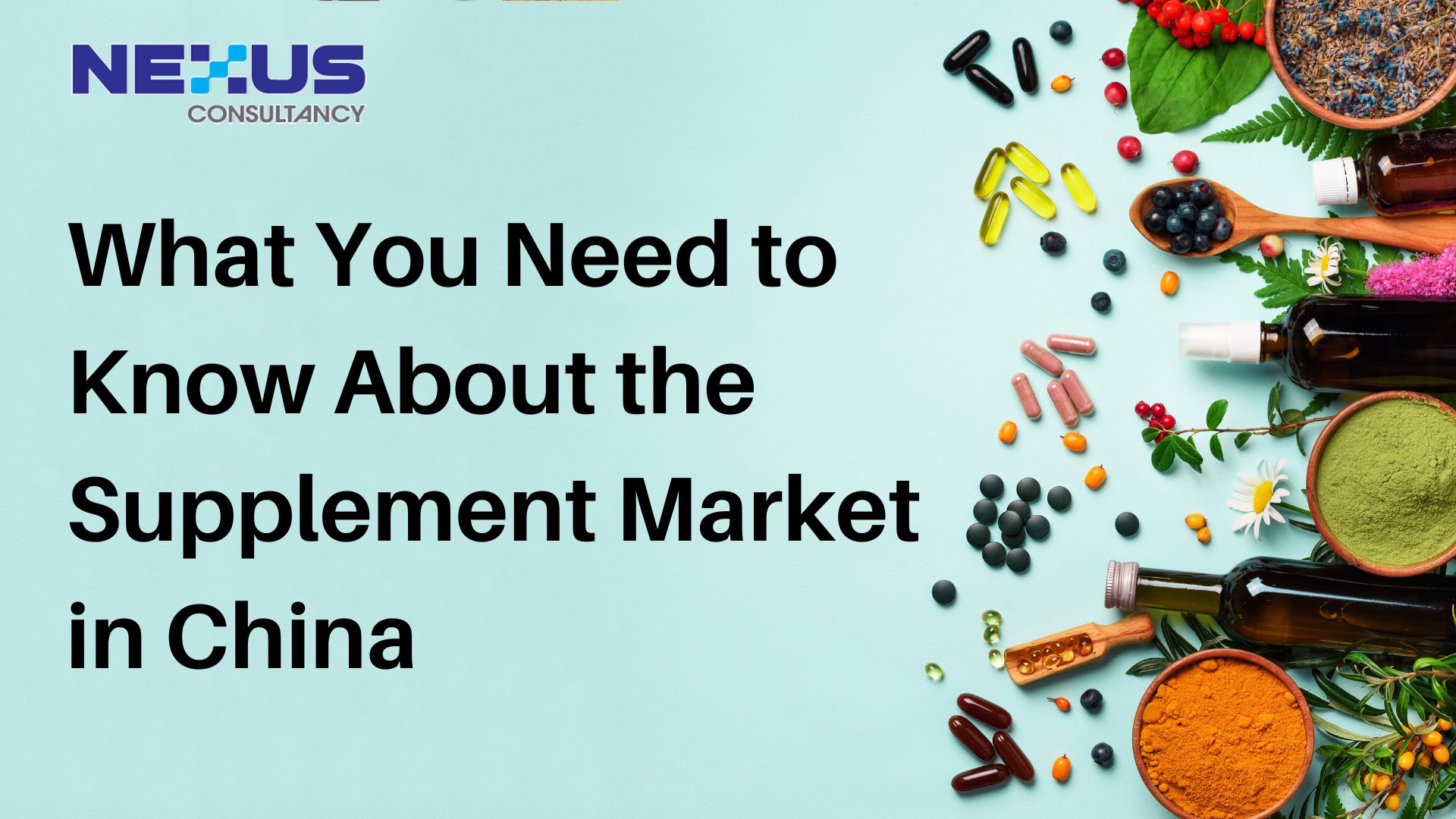
Healthy living has become a priority for the majority of Chinese people, particularly millennials. In fact, Chinese culture has long emphasized the importance of maintaining a healthy lifestyle. Chinese people are also more likely to spend more on vitamins and health supplements as their purchasing power grows.
By 2020, the market of vitamin and dietary supplements in China has reached CNY149 billion (US$22.3 billion), with a CAGR of 6.4% in the 2015-2020 period. This is why it has created a huge opportunity for health supplements’ brands and international brands to use their reputation, quality, and branding to target and attract consumers.

According to a survey conducted by Rakuten Insight in July 2020, around 77% of respondents living in Mainland China said they took dietary supplements to improve and strengthen their immune system. Only 7% of them took supplements for weight loss.
What drives the market of health supplements?
The size of the vitamin and health supplement market has shown an upward trend, owing to rising consumer awareness of health and sanitation issues in China. Vitamins C, E, and A, for example, are the most commonly heard vitamin supplements.
It’s also interesting to note that the Covid-19 pandemic resulted in a massive increase in demand for vitamins and health supplements, boosting sales of vitamins and supplements.
Following this trend, businesses should take the opportunity to expand their operations in China and capitalize on the long-term health supplement demand.
How to market your vitamins and health supplements in China?
Comply with Chinese regulations
You must follow the country’s regulations, just as you would in any other country. In fact, if you want to import your vitamins and health supplements in China, you must understand the exporting process well in advance before you ship your goods. Problems, or even rejection, at the customs can be highly costly.
If you want to know more about exporting health supplements to China, we highly recommend you to participate our upcoming webinar with CAIQTest Malaysia ” ( 小蓝帽)” webinar!
In this webinar, we will share with you the beauty and health food development and its’ market application in China and how to get your Blue Cap! Click the button and register now!
: ( 小蓝帽)
: / /
: : – :
:
:
More Article
5 FSSC 22000 V7 Implementation Gaps Companies Should Check Now
Chief Operating OfficerReview your FSSC 22000 V7 transition priorities, identify implementation gaps and explore relevant consultancy or training support.If your organization is preparing for FSSC 22000 Version 7, five practical areas are worth checking now: your...

ISO 22002-100:2025 Is Now Part of FSSC 22000 V7: What Does Your PRP System Need to Change?
Chief Operating OfficerReview ISO 22002-100 and ISO 22002-1 PRP changes for FSSC 22000 V7, identify gaps, and prepare for your upgrade audit.If your food manufacturing organization is transitioning to FSSC 22000 Version 7, its prerequisite program (PRP) system needs...
Beyond Compliance: How Environmental Action Can Reduce Costs and Create Business Value
Chief Operating OfficerSee how practical environmental action can cut resource waste, improve efficiency, manage risk and strengthen customer value.Environmental action can reduce business costs by lowering energy and water use, preventing material losses, reducing...

Stop Measuring Everything: The Environmental Metrics That Actually Matter
Chief Operating OfficerIdentify which environmental metrics can help management understand significant impacts, interpret performance trends and decide what action should follow.The environmental metrics that matter most are those that show where significant impacts...