
Danielle Tan
Chief Operating Officer
When it comes to HACCP validation, verification and monitoring, wrapping our minds around it is crucial and not always easy.
– 5 mins read
In the Codex HACCP 2020 standard, there is a guidance on 3.9 Establish a Monitoring System for Each CCP and 3.11 for Validation of the HACCP Plan and Verification Procedures:
Clause 3.9 Establish a Monitoring System for Each CCP
Monitoring of CCPs is the scheduled measurement or observation at a CCP relative to its critical limits. The monitoring procedures should be able to detect a deviation at the CCP. Further, the monitoring method and frequency should be capable of timely detection of any failure to remain within critical limits, to allow timely isolation and evaluation of the product. Where possible, process adjustments should be made when monitoring results indicate a trend towards a deviation at a CCP. The adjustments should be taken before a deviation occurs.
Clause 3.11.1 Validation of the HACCP Plan
Before the HACCP plan can be implemented, its validation is needed; this consists of making sure that the HACCP elements together are capable of ensuring control of the significant hazards relevant to the food business: identifying the hazards, critical control points, critical limits, control measures, frequency and type of monitoring of CCPs, corrective actions, frequency and type of verification and the type of information to be recorded.
Clause 3.11.2 Verification Procedures
After the HACCP system has been implemented, procedures should be established to confirm that the HACCP system is working effectively. These include procedures to verify that the HACCP plan is being followed and controlling hazards on an ongoing basis, as well as procedures that show the control measures are effectively controlling the hazards as intended. Verification also includes reviewing the adequacy of the HACCP system periodically and, as appropriate, when changes occur.

So, what exactly do we mean when we say “Validation”, “Verification” and “Monitoring”?
Validation is the process of obtaining evidence that the elements of the HACCP plan (CCP critical limits) are effective.
Verification is the process of checking using defined methods, procedures, tests and other evaluations, in addition to monitoring, to determine compliance with the HACCP plan.
Monitoring is a routine activity which provides evidence that a CCP is operating as intended. It is not verification.
So, in simple words:
Validation is – proving that it will work.
Verification is – proving that it is working according to the plan.
Monitoring is – proving that it is being done according to the plan.
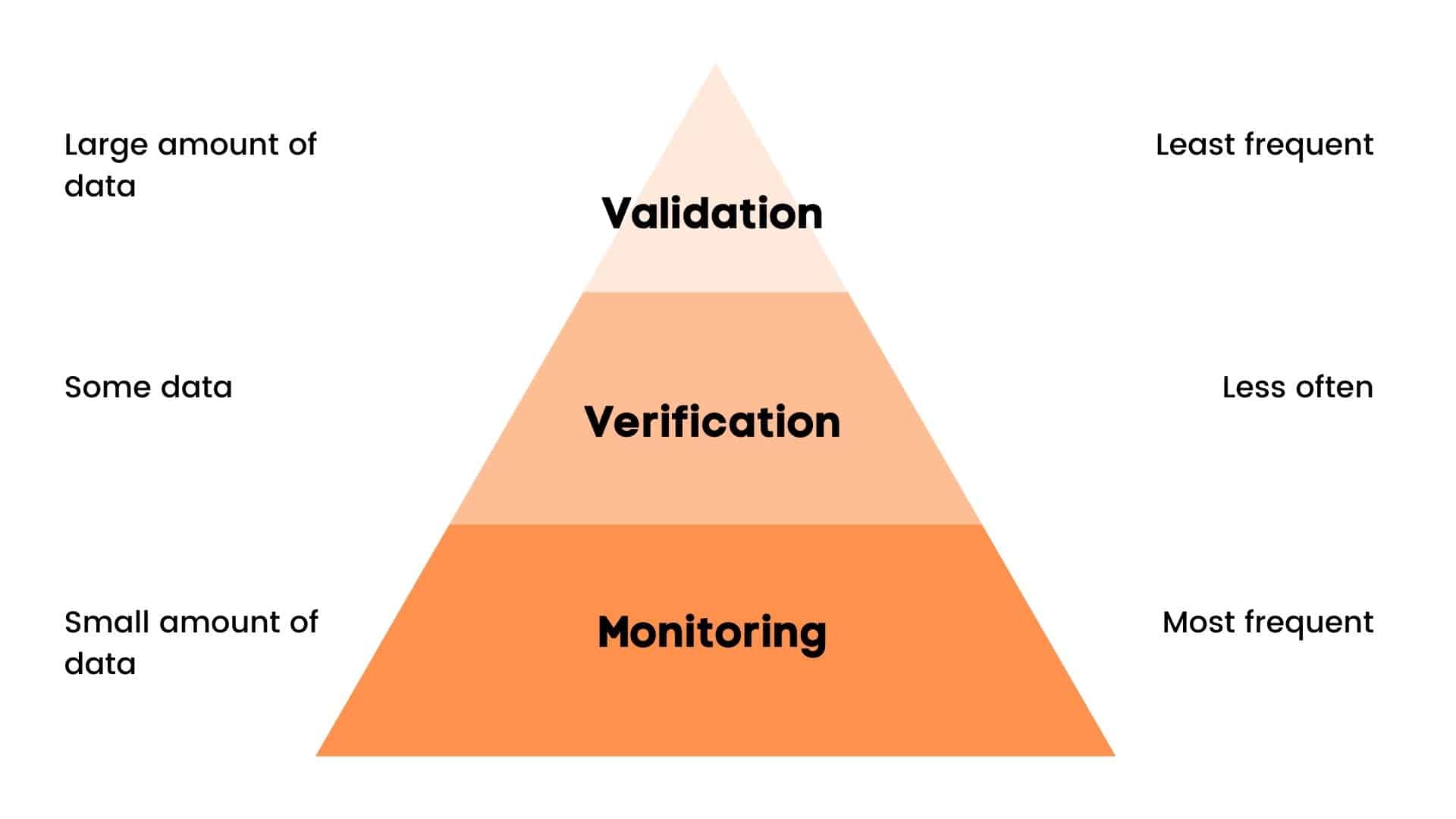
The Differences between Validation, Verification and Monitoring:

Here are some validation, verification and monitoring examples:

Review Your HACCP Plan Regularly
And finally, don’t forget about your HACCP plan once you’ve completed it. The program is a live, dynamic document and plan that should be reviewed and revised on a regular basis to reflect the facility’s, customers’, and regulators’ changing needs.
Reference :
- Codex Alimentarius General Principles of Food Hygiene CXC-1 1969 (version 2020)
- https://techni-k.co.uk/uncategorised/haccp-validation-verification/
- https://safefoodalliance.com/haccp/the-6th-haccp-principle-verification/
More Article
5 FSSC 22000 V7 Implementation Gaps Companies Should Check Now
Chief Operating OfficerReview your FSSC 22000 V7 transition priorities, identify implementation gaps and explore relevant consultancy or training support.If your organization is preparing for FSSC 22000 Version 7, five practical areas are worth checking now: your...

ISO 22002-100:2025 Is Now Part of FSSC 22000 V7: What Does Your PRP System Need to Change?
Chief Operating OfficerReview ISO 22002-100 and ISO 22002-1 PRP changes for FSSC 22000 V7, identify gaps, and prepare for your upgrade audit.If your food manufacturing organization is transitioning to FSSC 22000 Version 7, its prerequisite program (PRP) system needs...

Beyond Compliance: How Environmental Action Can Reduce Costs and Create Business Value
Chief Operating OfficerSee how practical environmental action can cut resource waste, improve efficiency, manage risk and strengthen customer value.Environmental action can reduce business costs by lowering energy and water use, preventing material losses, reducing...

Stop Measuring Everything: The Environmental Metrics That Actually Matter
Chief Operating OfficerIdentify which environmental metrics can help management understand significant impacts, interpret performance trends and decide what action should follow.The environmental metrics that matter most are those that show where significant impacts...